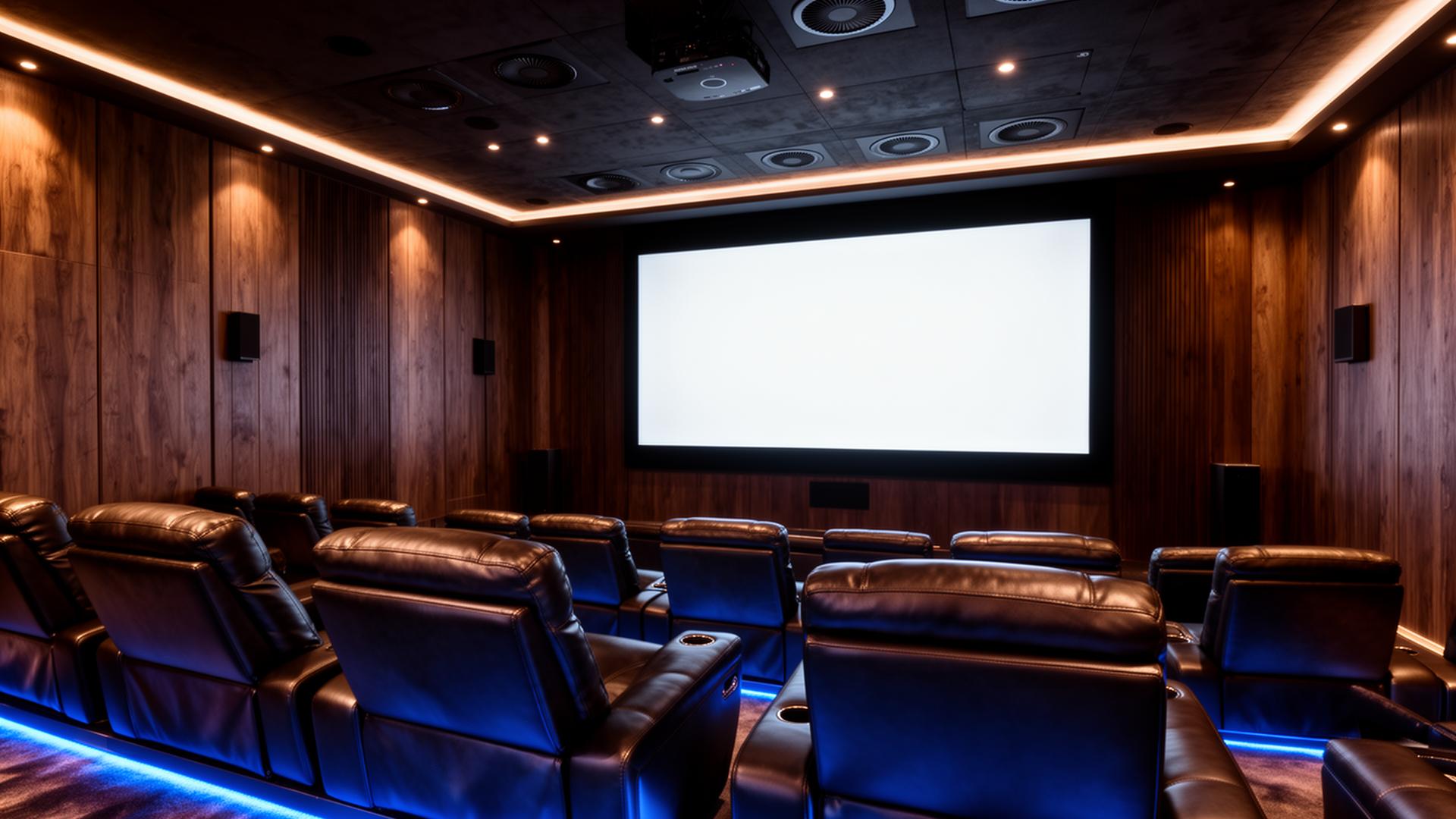
Luxury Home Cinema, Engineered as an Environment
Acoustic shell, calibrated optics, reference audio — designed as one architecture.
Common Challenges
Room acoustics ignored
Premium kit placed in untreated rooms loses most of its capability instantly.
Equipment over-specified, under-tuned
Reference gear shipped without calibration delivers mid-tier performance.
Poor seat ergonomics & sightlines
Beautiful rooms with the wrong screen height and seating geometry.
HVAC noise floor too high
Ambient noise stealing dynamic range from every scene.
Lighting and AV control disjointed
Cinema mode as an afterthought, not an engineered scene.
How Arif Khan Approaches It
Acoustic shell design, calibrated 4K HDR / laser projection, reference audio, integrated automation and architectural lighting — engineered as a complete environment.
Understand Environment
Deep discovery: site, threat model, operational reality, owner intent.
Design Architecture
Vendor-neutral systems architecture aligned to outcomes — not catalogues.
Integrate Systems
Engineer the program as one fabric, not a stack of independent products.
Validate Performance
Measure, calibrate, prove. Nothing is signed off until it performs.
Optimize Experience
Refine the human and operator experience over the long lifecycle.
Technology Components
Acoustic Shell
Isolation, absorption, diffusion engineered to the room.
Calibrated Display
4K HDR laser projection or premium LED reference systems.
Reference Audio
Dolby Atmos 7.2.4 → 9.4.6 with calibrated DSP.
Low-Noise HVAC
Engineered airflow with NC-20 ambient targets.
Cinema Automation
One-touch scenes binding optics, audio, lighting and climate.
Architectural Lighting
Layered lighting design that disappears when the lights dim.
Where It Gets Applied
Common Mistakes
Specifying equipment before the room
Ignoring acoustic isolation from the rest of the house
Skipping calibration after install
No structured owner handover
The terms you'll hear, explained
Specifications and proposals across security, automation and AV reuse the same vocabulary. Here are the ones that matter most — without the jargon.
A separate logical network on shared cabling — cameras, access control and BMS each get their own VLAN so traffic stays isolated and easier to secure.
Permissions are granted to roles (operator, supervisor, FM head) rather than individual users — clean, auditable, easier to revoke.
Automatic Number-Plate Recognition — reads vehicle plates at gates and barriers for whitelists, visitors and incident lookup.
An open standard that lets cameras and recorders from different brands talk to each other — protects you from single-vendor lock-in.
Open protocols used by BMS, HVAC and energy systems to exchange data — the building's nervous system.
One cable carries data and power to a camera, access reader or AP — simpler installation, fewer points of failure.
BMS runs HVAC and electrical. IBMS integrates BMS with security, fire, access, AV and energy under one operating model.
Public Address / Voice Alarm — code-compliant intelligible voice evacuation, required for crowded venues and large buildings.
Modern video compression — typically 40–60% less storage than H.264 at the same forensic quality.
Mean Time Between Failures — the right metric for picking industrial gates, barriers and infrastructure-grade equipment.
Storage redundancy — protects recordings against single-disk failure. Plan capacity after RAID overhead, not before.
Service Level Agreement — written response and resolution times that an AMC must meet. Vague SLAs aren't SLAs.
Frequently Asked Questions
What is the minimum room size?+
From 18 m² for an intimate cinema; ideally 25–40 m² for full reference performance with Dolby Atmos.
Is Dolby Atmos standard?+
Yes. Configurations from 7.2.4 up to 9.4.6 are routine, with reference-grade calibration.
Which projection technology do you specify?+
4K HDR triple-laser projectors from Sony, Barco, JVC and Christie, paired with acoustically transparent screens from Stewart, Screen Research and DNP.
What does a luxury home cinema cost in India?+
Reference-grade rooms typically range from ₹60 lakh to ₹4 crore depending on scale, finishes and seating.
Do you handle interiors and acoustics together?+
Yes — acoustic shell, finishes, seating and lighting are designed as one package with the interior architect.
Can existing rooms be converted?+
Yes, with acoustic isolation and a properly engineered shell built within the existing envelope.
Do you support LED video wall cinemas?+
Yes — direct-view LED reference systems are designed where ambient light or scale demands them.
What's the timeline?+
Typically 6–12 months from concept to calibrated handover, parallel to civil works.
For project-level planning across India, see Arif Khan's related consulting expertise:
Let's Design Intelligent Environments
A private consultation to scope your environment, the threats it faces, and the architecture that will serve it for the next decade.
Arif Khan supports project planning and advisory requirements across Delhi NCR — including Delhi, New Delhi, Gurugram, Gurgaon, Faridabad, Ghaziabad and Meerut — along with selected projects in Mumbai, Lucknow, Bengaluru and North India.